Evangelicals get the lion’s share of coverage in the CBA market. But what about Roman Catholic fiction? Flannery O’Connor and J.R.R. Tolkien are two notable writers whose Catholic identity is integral to their writing. Other Catholic literature is finding mainstream distribution.
Page 114 of 128
This is a VERY cool technique to take notes on books without actually writing within the book, dog-earing pages, etc.

I thought I might as well document one of my little “life hacks”.
1. When I start a new book I stick a few post-its on the first page inside the cover. That way there’s always some paper around to write notes on.
2. When I fill up a post-it I move it, either to the inside back cover or the inside front cover.
3. The added benefit of using post-its is that when I come to type up the notes (so I never lose them and can search them), the post-its stick handily to the side of the monitor.
Another trick I’ve adapted to the above is writing the page number on the Post It if there is a paragraph I particularly liked. I’ll sometimes photo copy the pages I note on the Post It after I’m done with the book and file it for reference.
The publishers of Catholic books are a tighter, closer community that what you find in the general CBA market. Here are some helpful tips on Catholic publishing with insights into unique characteristics of the Catholic book publishing world.
Read more: Catholic Book Publishing
A nice interview with book reviewer Tim Frankovich on Christian Fantasy on the INsites blog:
read the article
A summary of some Catholic authors, many of them fiction writers:
Catholic authors have created a niche for themselves that is growing in popularity in both fiction and non-fiction. American Gate Magazine has a wonderfully comprehensive list of best-selling Catholic books, Catholic publishers, the Catholic Book Publishers Association Bestsellers list, Jesuit authors and the Catholic Press Association book award winners.
Read more: Catholic Authors
Dicehaven Podcast
Dicehaven is an actual play podcast featuring various tabletop RPGs. We’re currently playing Imperium using the Traveller RPG (Mongoose 2nd Edition).
Listen now to our first episode.
Listen to us on iTunes, Spotify, and other platforms (links are at anchor.fm/dicehaven).
Follow our Instagram posts at instagram.com/dicehavenpodcast.
About Us
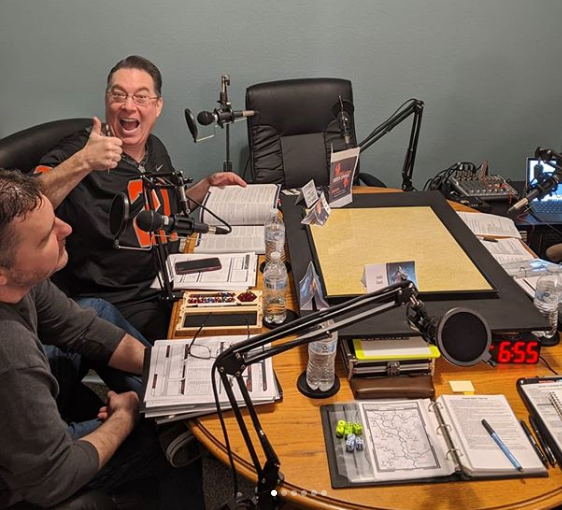
Hello and welcome to Dicehaven! We are a game club in the DFW area who play tabletop roleplaying games. Check out our RPG podcast and our musings and resources on roleplaying.
Recent Comments