Page 98 of 128
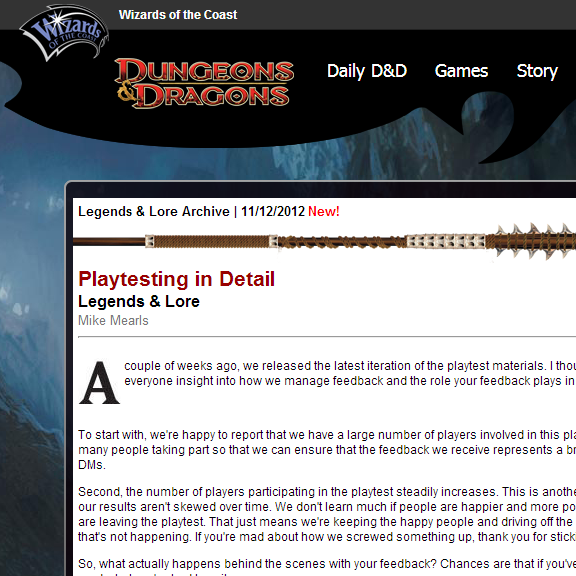
- D&D product manager Mike Mearls is using a software design technique (one I am very familiar with) to design D&D Next! This is really interesting if you’re a programmer. Mearls wrote:
“To start with, we work in two-week sprints aimed at producing material for the next package. If you’ve worked in software development, you might be familiar with the Scrum process. We’ve been using it since the late summer to drive our efforts, and so far it is working well. Scrum focuses our efforts on delivering features of the game—classes, races, tactical combat, multiclassing—in an iterative manner. Within that process, I serve as the product owner.” (Source)
According to this article, a new D&D Next playtest packet will come out today. This one will take characters up to level 10. Except for healing rules and the need for more monsters, the core rules will be pretty complete at this point.
Coming after this playtest we will see:
- High-level play
- Multiclassing
- New classes and races
- Healing (updates based on playtest feedback; this is one mechanic which admittedly still needs some work)
- More monsters
In addition to the core rules, we can expect to see these add-on rules modules (which presumably will be independent from the core rules):
- Tactical combat
- Mass battles
- Realm management
- Structures for exploration and interaction
Signup for the playtest here.
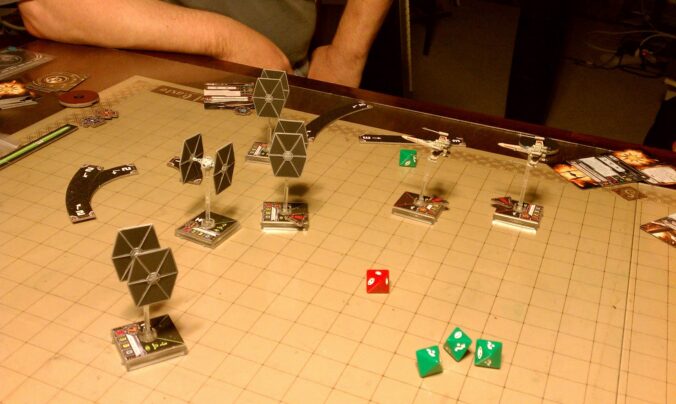
What do you do when several players in your game group can’t make it to your regularly scheduled RPG game? One of my gamer buddies wrote a post about a game to play in such circumstances. Fantasy Flight Games Star Wars X Wing is an easy to play beer-and-pretzels game you can run as a backup game when you have cancellations. His experience was you could run two games in about two hours. Alternatively, you could run a game like this during a ‘buffer’ hour before your main game begins, or after the main RPG game for those who want to game longer. (Hat tip to +Steve Balog; also see pictures and an additional review from one of the games players).
Interesting perspective from one blogger:
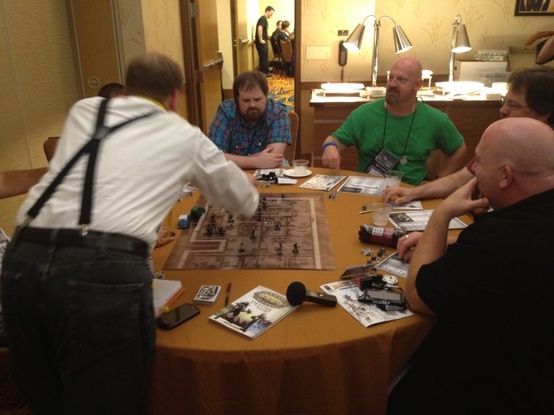
Tabletop RPGs are a fusion between these two primal needs, human contact and imagination. By sitting across from another player and expressing self imagination (through the imagination invested in their character) and social imagination (through the imagination of a shared world) both needs are fulfilled. Source


Recent Comments